The Services Drag: Why Buying Hours Will Never Deliver Software at the Speed of Relevance
When defense programs reward labor consumed instead of complexity removed, software delivery slows down. Productized platforms provide the leverage needed to deliver secure capability at the speed of relevance.
If you walk into any major program office across the DoD today, you will hear the exact same frustration from engineering leads and defense executives alike:
“Why does it take two years and thirty million dollars just to get a basic application deployed to a classified environment?”
Engineers are burning out in air-gapped rooms, wrestling with disconnected tools and fighting the "Final Boss" of compliance just to ship a single line of code. Meanwhile, defense leaders watch budgets evaporate while critical capabilities stall in staging environments.
The pain is real, but the diagnosis of the problem is usually wrong.
We act like this is a technical failure. We assume the engineers aren't skilled enough, the open-source tools aren't mature enough, or the compliance checklist is simply too long. But the brutal reality is much simpler:
“The system is perfectly designed to produce the slow, fragile results it is currently getting because the incentives are entirely wrong.”
The Diagnosis: We Are Paying for Activity Instead of Leverage #
The failure is not purely technical; it is structural.
Much of the defense contracting system is designed to purchase linear inputs, such as people, hours, work packages, and periods of performance. Modern software platforms create value differently. Their advantage comes from reuse, automation, and standardization—the ability to solve the same class of problem repeatedly without rebuilding the solution each time.
When the buying model rewards labor consumed rather than complexity removed, the program should not be surprised when complexity persists.
When a program needs a DevSecOps pipeline to achieve a Continuous Authority to Operate (cATO), the default acquisition reflex is often to launch another integration project. A new team is assembled. A new architecture is proposed. A familiar collection of open-source components is wired together in a slightly different configuration.
Some integration is unavoidable. Mission environments have real constraints. But too often, necessary adaptation becomes an excuse to rebuild commodity platform capabilities from the ground up.
“When you pay vendors by the hour to build custom infrastructure, you are paying them to admire the problem.”
The uncomfortable truth is that a labor-based contract does not naturally reward a vendor for making itself less necessary.
The incentive for a services-heavy contract is to maximize billable hours, which inevitably leads to maximized complexity. Why would a vendor hand you the keys to an automated, standardized platform on day one when they can instead bill you for a fifty-person engineering team to manually integrate 30 different CNCF tools over three years?
This is what we call the Services Drag. It relies on the false assumption that your mission is so "unique" that it requires completely custom scaffolding. However, custom everywhere equals slow everywhere. When every program office acts like a boutique workshop building snowflake Kubernetes clusters, we destroy any chance of interoperability, portability, or speed.
The Solution: Product Lift and Immediate Repeatability #
Engineering our way out of this trap is impossible as long as the business model incentivizes failure. To win, we must stop treating software delivery like a custom construction project and start treating it like a product. It's time to shift the paradigm from Services Drag to Product Lift.
The greatest inherent advantage of software is its immediate repeatability. If a problem has been solved once, it should be codified, productized, and deployed infinitely at near-zero marginal cost.
If you are trying to secure containers, enforce zero-trust networking, or deploy to the tactical edge, those problems have already been solved. You do not need to build a custom pipeline; you need to adopt an opinionated platform.
This is exactly why we built SmoothGlue®. Rather than selling 10,000 hours of consulting to wire together open-source tools, we provide a strategic acquisition advantage: a product that enforces golden paths by default. SmoothGlue encodes the API contract between developers and platform engineers so that security, compliance, and deployment are inherited rather than custom-built every time. This shifts the focus from managing billable hours to funding mission-critical outcomes, drastically accelerating your time-to-capability.
Our rule of thumb is simple: Fund outcomes, not scaffolding. If an off-the-shelf, productized platform can deliver 80% of your baseline infrastructure needs on day one, buy it. Take the thousands of engineering hours you just saved and relentlessly focus them on the remaining 20%—the actual mission logic and unique algorithms that win fights.
We are not building platforms for the sake of admiring elegant code. We are building them because modern missions demand software that can be delivered quickly, securely, and repeatedly.
The warfighter at the tactical edge, operating in disconnected or degraded environments, does not care how many hours your systems integrators billed or how many custom YAML files you wrote. They care whether the application works, whether the data is accurate, and whether the capability arrives when it is needed.
In fast-moving environments, capability delayed is capability denied. For leadership and decision-makers, the choice is clear: continue pouring budget into the endless cycle of bespoke infrastructure projects, or pivot to repeatable platforms. Investing in productized leverage is not just an IT decision; it is the key to strategic dominance and long-term budget efficiency.
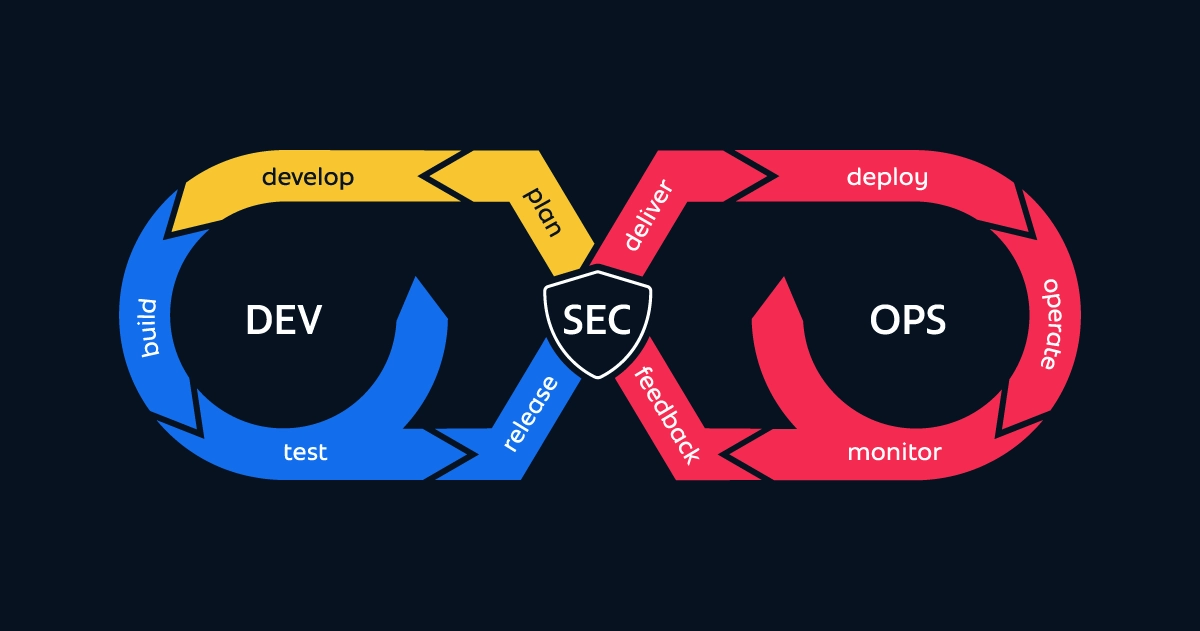
If you are an engineer dealing with the daily frustration of fragile pipelines and snowflake environments, see how we are replacing the DIY model with platform-first engineering in our companion piece, DevSecOps is the New MS-DOS.
Move fast without breaking things. Built-in guardrails keep your apps secure, compliant, and resilient—no matter where you deploy.
👉 Start building on the platform that scales with you.
Product lift beats services drag. In defense, the teams that standardize on productized platforms compound speed, security, and learning. Services can be useful, but service-heavy delivery adds friction that kills timelines and blows budgets.
The defense world has a gravity well that pulls companies toward staff augmentation and bodies-for-hours. BrainGu was built to fight that gravity. Product-first is not a branding exercise—it's a strategic alignment with where defense acquisition is going.
In his remarks, Mitch Rubinstein, BrainGu’s Director of Mission Systems Group, contextualized cyberwarfare with patterns of conflict throughout history, described the DevSecOps approach to security, and provided examples illustrating DevSecOps as a critical factor in the time-competitive cybersecurity environment of today.
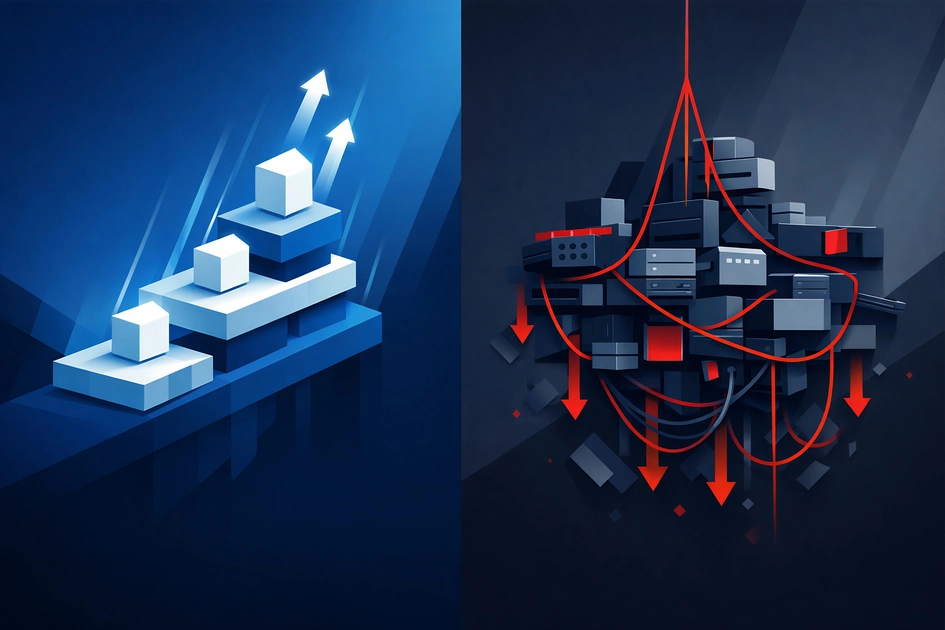 The Aerodynamics of Building Products vs Consulting in the Defense Innovation Ecosystem