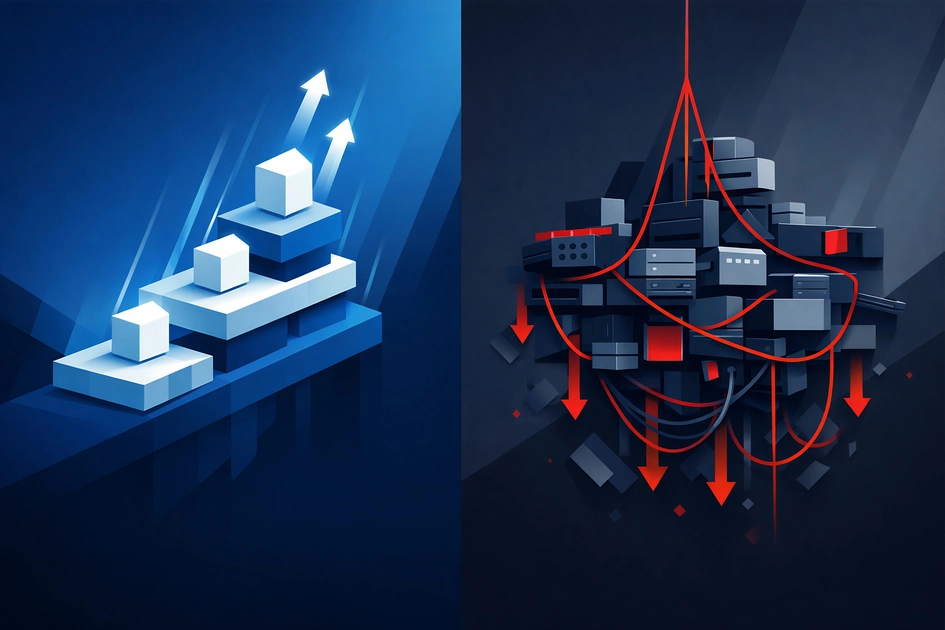
Why We'll Never Grow Up into a Traditional Defense Contractor (And That's Okay)
The defense world has a gravity well that pulls companies toward staff augmentation and bodies-for-hours. BrainGu was built to fight that gravity. Product-first is not a branding exercise—it's a strategic alignment with where defense acquisition is going.
The defense world has a gravity well. If you stay in it long enough, you tend to drift toward the same destination: staff augmentation, bodies-for-hours, and a business model optimized for capturing headcount instead of delivering capability.
BrainGu was built to fight that gravity. We treat product as the center of gravity, not labor. And we are not going to age out of that stance.
This isn't a philosophical preference. It's a practical one. The Department of Defense has been clear about where it wants to go: more speed, more commercial leverage, more modularity, and more continuous delivery. The Software Acquisition Pathway and the Warfighting Acquisition System reflect the same message. Leaders are being told to buy commercial when possible, cut layers, embrace iteration, and field capability faster.
None of that aligns with the classic GovCon labor model. Product companies are built for this future. Staffing companies are built for the past.
Start from first principles: staff augmentation is predictable revenue, but it scales linearly and delivers marginal returns to the mission. You get a contractor army, not a capability. You get more coordination overhead, not more outcomes.
Traditional defense firms know this and optimize for it. They are rewarded for labor volume, process adherence, and compliance theater. Innovation happens accidentally, not by design.
The Department's acquisition reform efforts call this out directly. They emphasize urgency, modular open systems, portfolio thinking, and rapid increments instead of fully baked requirements. None of that works if your business model is selling hours.
A product-first company can move with this shift. A labor-first company cannot.
There is a common fear in government that a product company can only deliver 20 percent of what a program needs. The reality is the acquisition community itself has already made the opposite argument. Senior DoD leaders consistently push toward commercial solutions that satisfy the bulk of mission needs quickly, with the remaining gaps addressed through integration and continuous improvement.
A mature product organization that invests heavily up front can deliver the 80 percent solution on day one. Not because it cuts corners, but because it builds repeatable infrastructure, security, pipelines, documentation, and operator experience into the platform itself.
The last 20 percent becomes configuration, not reinvention. That is the entire point of productization: build once, deliver everywhere.
This is why SmoothGlue exists. We built the developer ecosystem, the secure pipeline, the compliance automation, the observability stack, the deployment patterns, and the user experience guardrails. No one pays us to rebuild them a thousand times. We build it once, then focus on the mission problems that actually require human brains.
The new acquisition frameworks prioritize speed with rigor. That is exactly how a platform behaves.
SmoothGlue can be deployed in under two hours. It reaches full configuration at high impact levels in days, not months. It already runs at IL4, IL6, IL6/REL, IL6/NF, IL6 Edge, and TS/SCI with full ATOs. Most programs fight for years to reach that bar.
Speed is something we design into the product, not something we negotiate.
Traditional contractors scale by hiring more humans. Product companies scale by making humans more effective.
SmoothGlue supports USAF ABMS CBC2. It supports USCYBERCOM Unified Platform. It supports the LevelUp software factory. It supports thousands of concurrent users across North America.
We do that with a platform that multiplies developer capability, not an army of contractors. We are the opposite of bloated headcount. We deliver capability curves that keep climbing without collapsing under staffing pressure.
3. Alignment with the transformation the Department is already demanding#
The Department is clear about the future it wants to build:
Commercial preference
Modular open systems
Direct-to-supplier contracting
Fewer layers
Portfolio outcomes
Iterative increments
Buy what works
These are product values, not staff augmentation values.
SmoothGlue as a Proof Point: Mission Outcomes Without the Contractor Army#
Here is the evidence.
SmoothGlue is deployed on missions operating at the highest classification levels.
It is the backbone for ABMS CBC2 application and DevSecOps operations.
It powers key components of USCYBERCOM Unified Platform.
It supports WIDOW mission planning, now used by the Air Force and evaluated by the Navy.
These are not prototypes. They are not experiments. They are critical mission systems delivered without building a 200-person contract team.
This is the model the Department says it wants: capability fielded at the speed of relevance, with reduced friction, modularity, and commercial leverage.
Why We Won't Grow Into a Traditional Defense Contractor#
It would be easier. Selling hours is easier than building platforms. Scaling staff is easier than building reusable infrastructure. Chasing every RFP is easier than saying no.
But easier is not better.
A traditional GovCon model would slow us down. It would dilute the product. It would replace engineering culture with contract culture. It would push us toward compliance-first, operator-last thinking.
The Department is asking for speed, integrated portfolios, iterative delivery, modularity, commercial preference, and accountable leaders empowered to make trades. That is the world product companies thrive in.
Product-first is not a branding exercise. It is a strategic alignment with where defense acquisition is going.
The Department wants 80 percent solutions that arrive quickly, mature continuously, and integrate cleanly. Product companies deliver that. SmoothGlue delivers that across multiple critical missions today.
We are not going to grow up into a traditional defense contractor, because the future of defense contracting has already moved on. The Warfighting Acquisition System lays it out. The Software Acquisition Pathway enforces it. The missions we support prove it.
BrainGu will stay the kind of company built to deliver capability, not headcount.
And that is more than okay. It is necessary.
Move fast without breaking things. Built-in guardrails keep your apps secure, compliant, and resilient—no matter where you deploy.
👉 Start building on the platform that scales with you.
Open source is never free. Not in regulated environments. Not in DoD mission systems. Not in any place where uptime, security, traceability, or accreditation matter. You can get incredible capability from open ecosystems, but if you want something that actually holds up in production, you will pay for it one way or another.
Product lift beats services drag. In defense, the teams that standardize on productized platforms compound speed, security, and learning. Services can be useful, but service-heavy delivery adds friction that kills timelines and blows budgets.

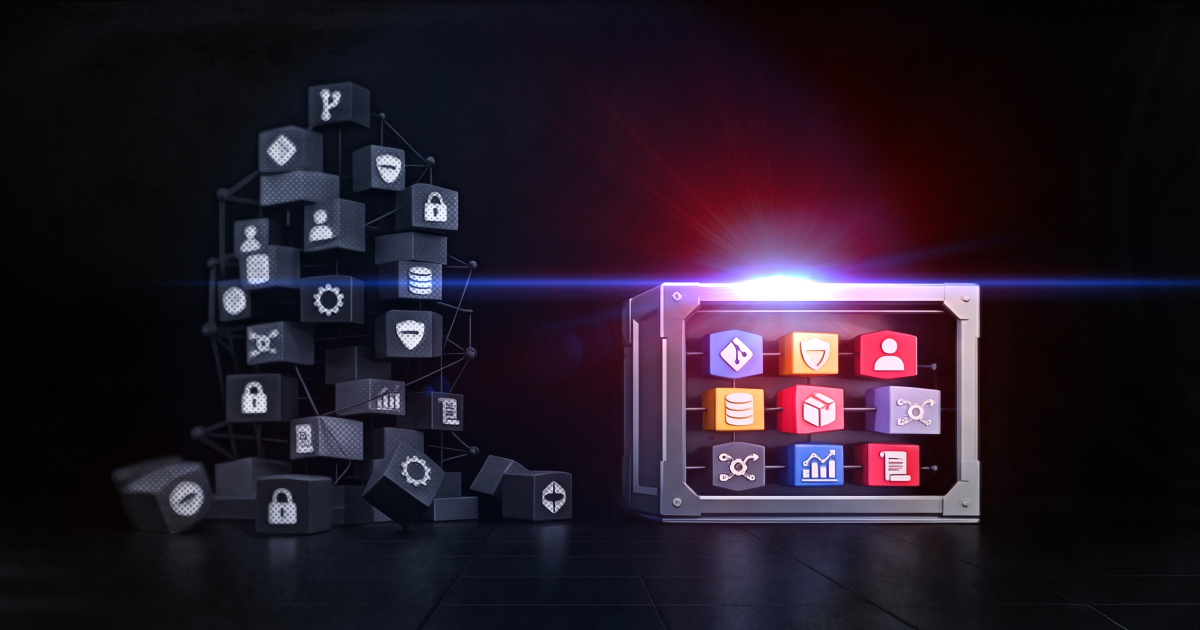 The Hidden Costs of "Free" Software: Flexibility vs Commercial Polish